24-hour crisis hotline: (772) 288-7023
Safety. Support. Solidarity.

2026 Domestic Violence Summit: From Awareness to Action

October 13, 2026 | MIDFLORIDA Event Center, Port St. Lucie

SafeSpace’s inaugural Domestic Violence Summit on October 13, 2026, at the MIDFLORIDA Event Center in Port St. Lucie was organized to strengthen how professionals recognize domestic violence, respond to survivors, and connect people with support. From Awareness to Action linked shared learning with a practical invitation to improve the regional response through the Circuit 19 Domestic Violence Task Force.

Full agenda and session descriptions/bios

2026 Domestic Violence Summit Highlights

October 13, 2026 | MIDFLORIDA Event Center, Port St. Lucie, Florida

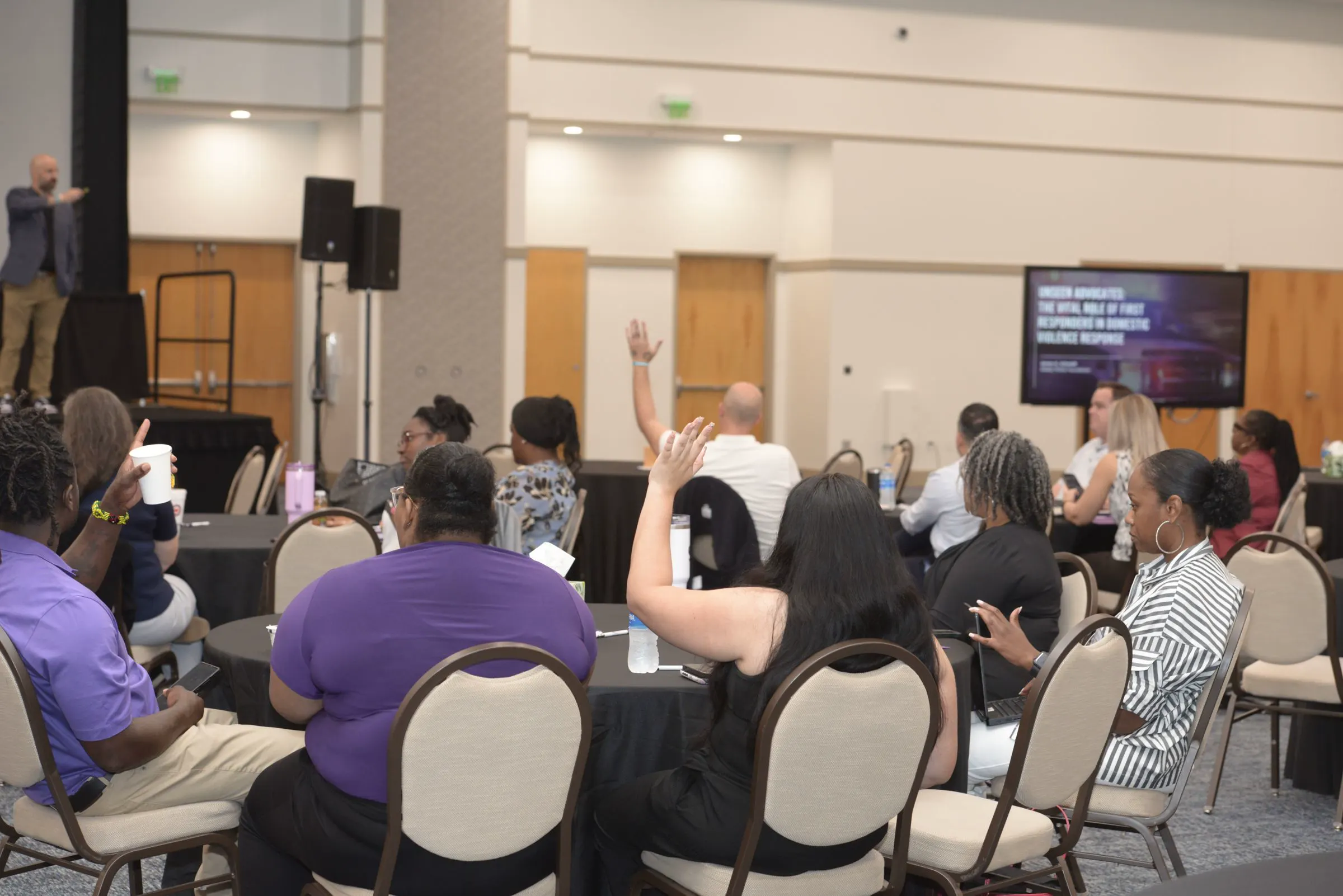
Shared learning brought regional professionals together around domestic violence response.

SafeSpace, the Circuit 19 Domestic Violence Task Force and the Gabby Petito Foundation brought regional professionals together to strengthen how communities recognize abuse, respond to survivors and connect people with support. The Summit linked practical training and survivor experience with actions participants could carry into their own agencies.

100%

rated overall session value Great or Very Good

82 of 82 ratings

98.8%

rated enhanced multidisciplinary perspective Great or Very Good

81 of 82 ratings

97.6%

rated likelihood of attending another SafeSpace training Great or Very Good

80 of 82 ratings

Overall session value averaged 4.95 out of 5.

Joe Petito, Jim Schmidt, Jennie Carter and Chris Finkley
Jennifer Fox, Jennie Carter and Melanie Afanador

Thank you to our sponsors

PresentingWong Family Foundation
ImpactGabby Petito Foundation; Coral Shores Behavioral Health
Community PartnerInspired Closets; Jan and Jessica Malasek; Tykes & Teens
SupportingHouse of Hope; iTHINK Financial; John Schmahl; Thompson’s Remodeling & Home Repair

Evaluation highlights reflect 82 records from 83 submissions after one identifiable paper/online repeat was counted once. Task Force figures reflect 76 reconciled interest records. Some anonymous forms may overlap. Findings describe perceived value and expressed interest, not measured changes in practice or survivor safety. Results updated November 2, 2026.

SafeSpace Summit Brings Regional Partners Together to Strengthen Domestic Violence Response

October 13 training connects professional practice and survivor experience with continued regional action

PORT ST. LUCIE, Fla. — SafeSpace’s Domestic Violence Summit brought regional professionals together Oct. 13 at the MIDFLORIDA Event Center to strengthen how communities recognize domestic violence, respond to survivors and coordinate support. The event connected practical training with survivor experience and opportunities for continued work through the Circuit 19 Domestic Violence Task Force.

Held during Domestic Violence Awareness Month, “From Awareness to Action: Safety. Solidarity. Solutions.” was hosted by SafeSpace in collaboration with the Circuit 19 Domestic Violence Task Force and the Gabby Petito Foundation. The Summit grew from feedback shared by survivors and professionals about gaps in recognizing abuse, understanding trauma, documenting concerns and connecting people with appropriate help.

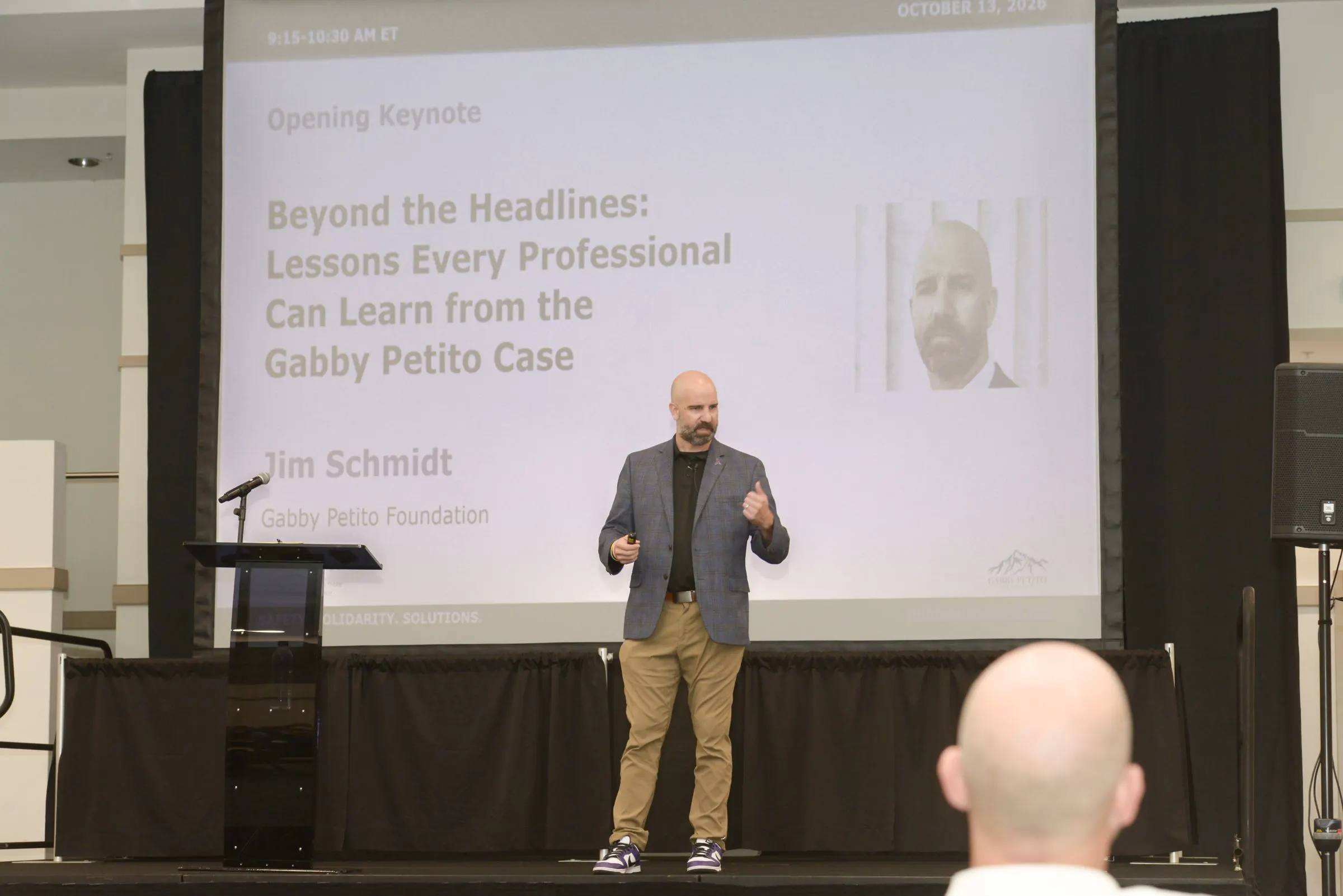
Featured presenter Jim Schmidt, a Gabby Petito Foundation board member, Gabby Petito’s stepfather and a former first responder, led sessions on lessons from the Gabby Petito case, recognizing serious risk and understanding how trauma can affect survivor behavior.

Two concurrent learning tracks offered guidance specific to participants’ roles. Schmidt’s track addressed risk recognition, evidence and documentation for law enforcement, prosecutors, 911 personnel and other first responders. SafeSpace Chief Program Officer Melanie Afanador led the second track on identifying abuse and strengthening referral pathways for advocates, child welfare, healthcare and mental health professionals, educators and community partners.

Survivor and advocate Jennie Carter joined Schmidt for the closing plenary, “Every Link Matters: Building a Coordinated Response That Saves Lives.” Her contribution centered survivor experience in the discussion of how professional decisions and coordinated support affect people experiencing abuse. One participant shared, “This Summit validated my experience as a DV survivor.”

The Circuit 19 DV Task Force is preparing for a January 2027 relaunch to strengthen a coordinated community response across Indian River, Martin, Okeechobee and St. Lucie counties. Professionals, organizations and community members interested in participating, sharing resources or requesting training can contact info@safespacefl.org.

SafeSpace thanks the sponsors who made the Summit possible: Presenting Sponsor Wong Family Foundation; Impact Sponsors Gabby Petito Foundation and Coral Shores Behavioral Health; Community Partner Sponsors Inspired Closets, Jan and Jessica Malasek, and Tykes & Teens; and Supporting Sponsors House of Hope, iTHINK Financial, John Schmahl, and Thompson’s Remodeling & Home Repair.

SafeSpace’s Domestic Violence Awareness Month campaign continues with Wear Purple Day on Thursday, Oct. 22. Businesses, community organizations and residents are invited to wear purple, share photos using #AwarenessToAction and share SafeSpace’s resources to help people find support. Community members can also donate to support services for survivors and their children. Visit SafeSpaceFL.org to learn more.

About SafeSpace

SafeSpace is the Treasure Coast’s only state-certified domestic violence center, serving survivors and their children in Martin, St. Lucie and Indian River counties. Its services include emergency shelter, a 24/7 crisis hotline, advocacy, legal assistance, counseling, financial literacy, community outreach and prevention education. For help, call the 24/7 hotline at 772-288-7023. Learn more at SafeSpaceFL.org.

Agenda

MIDFLORIDA Event Center, Port St. Lucie. 8:30 AM–3:30 PM. From Awareness to Action.

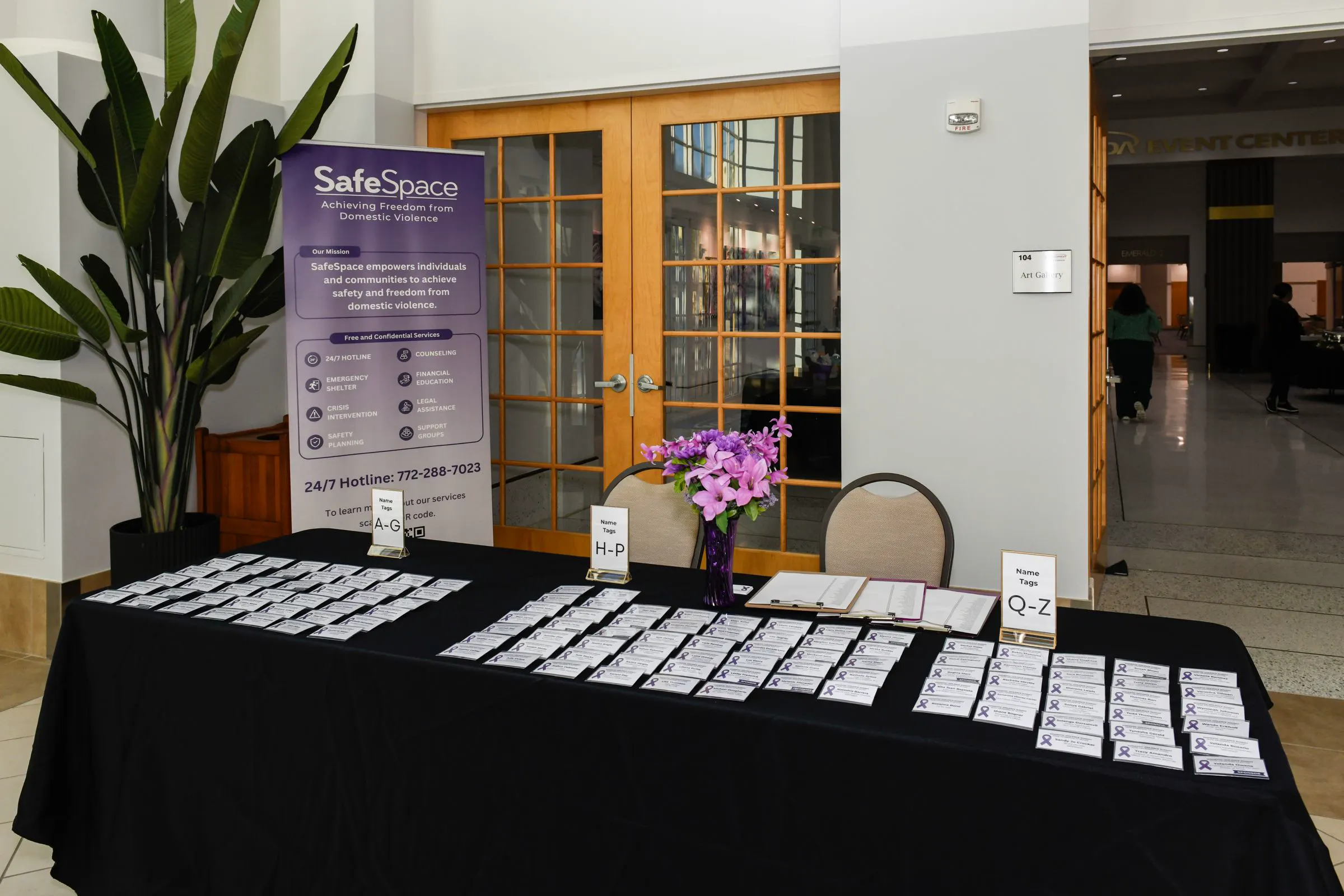
8:30–9:00 AM Registration, Continental Breakfast, Resource Tables, and Networking

9:00–9:15 AM Welcome and Opening Remarks. Jennifer Fox, CEO, SafeSpace. Christina Current, Outreach and Advocacy Manager, SafeSpace.

9:15–10:30 AM Opening Keynote — Beyond the Headlines: Lessons Every Professional Can Learn from the Gabby Petito Case. Presenter: Jim Schmidt.

10:30–10:45 AM Refreshment Break

10:45–11:45 AM Plenary — Seeing What Trauma Hides: Understanding Victim Behavior & Improving our Response. Presenter: Jim Schmidt.

11:45 AM–12:30 PM Lunch, Sponsor Recognition, Resource Tables, and Networking

12:30–1:30 PM Two concurrent learning tracks.

1:30–1:45 PM Refreshment Break and Transition

1:45–2:45 PM Closing Plenary — Survivor Impact Story + Every Link Matters: Building a Coordinated Response That Saves Lives. Presenters: Jim Schmidt and Jennie Carter.

2:45–3:20 PM Regional Action Commitments. Jim Schmidt, Jennifer Fox, and Christina Current.

3:20–3:30 PM Closing Remarks, Evaluation, CEU Instructions, and Door Prizes. Jennifer Fox and Christina Current.

Welcome from Jennifer Fox, CEO, SafeSpace

Dear Summit Participants,

Welcome to the 2026 Domestic Violence Summit: From Awareness to Action. On behalf of SafeSpace, thank you for joining us today and for the care, expertise, and commitment you bring to our community.

Domestic violence affects every part of a survivor’s life, and a meaningful response requires all of us. Today brings together professionals and community partners across disciplines to strengthen how we recognize risk, respond to trauma, and connect survivors with safety and support.

Our hope is that you leave with practical tools, a deeper understanding of survivor experiences, and stronger relationships with the people who share this work. Please listen with openness, ask thoughtful questions, and consider one concrete step you can take after today to put your learning into action.

We are grateful to Jim Schmidt, Melanie Afanador, and Jennie Carter for sharing their knowledge, perspectives, and lived experience. We also extend our sincere thanks to every sponsor whose generosity helps make this gathering possible, and to the partners and volunteers who have contributed to the day.

Together, we can build a more coordinated, compassionate response to domestic violence. Your presence matters, and the connections we make today can strengthen the way we serve survivors and families throughout our region.

Thank you for being part of this work.

With gratitude,

Jennifer Fox
CEO, SafeSpace

Opening Keynote, 9:15–10:30 AM. Jim Schmidt. Beyond the Headlines: Lessons Every Professional Can Learn from the Gabby Petito Case

Who should attend: All summit attendees, including law enforcement, prosecution, 911/dispatch, fire/EMS, healthcare and mental health professionals, advocates, child welfare and school professionals, and community partners.

Domestic violence response begins with recognizing what may be visible and what may go unseen. The Gabby Petito Foundation’s comprehensive training program establishes a shared foundation for understanding domestic violence, its impact on victims and communities, and the importance of a coordinated response.

Participants will explore physical and non-physical abuse, coercive control, power and control dynamics, and the effects of trauma on the brain and body. National and local data, real-world examples, and interactive discussion will frame the impact of domestic violence and the importance of recognizing both visible and non-visible indicators of non-fatal strangulation, including symptoms that may emerge later.

Participants will leave with a shared foundation for recognizing risk and understanding how their professional roles contribute to a compassionate, coordinated response.

By the end of this session, participants will be able to:

  1. Explain how the Unseen Advocates Program addresses response gaps and use national and local data to describe the scope and impact of domestic violence.
  2. Differentiate physical and non-physical forms of abuse, including coercive control and power and control dynamics.
  3. Describe how trauma affects the brain and body, including victim behavior, memory, and responses during and after an assault.
  4. Recognize the lethality and warning signs of strangulation, including visible and non-visible symptoms, delayed onset, and behavioral or physiological indicators.
All-attendee plenary, 10:45–11:45 AM. Jim Schmidt. Seeing What Trauma Hides: Understanding Victim Behavior & Improving our Response

Who should attend: All summit attendees, including law enforcement, prosecution, 911/dispatch, fire/EMS, healthcare and mental health professionals, advocates, child welfare and school professionals, and community partners.

Recognizing the effects of trauma is only the first step; how a professional responds can influence trust, safety, and continuity of care. Building on the opening session, this plenary turns foundational knowledge into trauma-informed, victim-centered practice.

Through practical application, participants will explore initial victim contact, scene safety, assessment, communication, documentation, and referrals. The session will connect understanding of trauma and victim behavior with approaches that prioritize dignity, safety, and empowerment.

Participants will examine how professionals’ actions fit together across the response process, including interagency collaboration among law enforcement, fire/EMS, healthcare, legal/judicial professionals, and advocates. The session will emphasize accurate documentation, continuity of evidence and care, coordinated handoffs, and accountability.

By the end of this session, participants will be able to:

  1. Apply trauma-informed, victim-centered communication to foster trust, minimize re-traumatization, and support survivor dignity, safety, and empowerment.
  2. Assess scene safety and survivor needs, identifying medical, investigative, and support priorities appropriate to their professional role.
  3. Document victim statements, injuries, and observations accurately to support investigations and ensure continuity of care.
  4. Describe partner roles and use coordinated referrals and handoffs to connect survivors with local and national resources for safety planning, medical services, and ongoing advocacy support.
Learning Track 1, 12:30–1:30 PM. Jim Schmidt. From Contact to Courtroom: Recognizing Risk, Documenting Evidence & Improving Outcomes

Who should attend: Law enforcement, prosecution, fire, emergency medical services (EMS), 911/dispatch, and other first responders.

A coordinated domestic violence response depends on what partners recognize, document, and communicate. This breakout explores high-risk indicators, trauma-informed engagement, continuity of evidence, coordinated handoffs, and accountability across dispatch, law enforcement, fire/EMS, and prosecution.

Using case scenarios, participants will examine coercive control, escalation, non-fatal strangulation indicators, scene safety, trauma-informed communication, and documentation. Discussion will focus on victim statements, injuries, behavioral indicators, scene information, and what can be lost when documentation or handoffs are incomplete.

Participants will consider how information moves from dispatch to responders, fire/EMS to healthcare, law enforcement to prosecution, and first responders to advocates. They will leave with practical strategies to strengthen communication, comprehensive documentation, continuity of care, and interagency coordination.

By the end of this session, participants will be able to:

  1. Recognize domestic violence, coercive control, escalating risk, and non-fatal strangulation indicators while assessing scene-safety, medical, investigative, and victim-support priorities.
  2. Apply trauma-informed communication and accurate documentation practices to capture victim statements, injuries, behavioral indicators, scene information, and objective observations.
  3. Identify critical information for referrals, transfers, and multidisciplinary handoffs and distinguish the roles of dispatch, law enforcement, fire/EMS, healthcare, prosecution, and advocacy partners.
  4. Apply the Unseen Advocates framework to a case scenario to identify missed warning signs, documentation gaps, and opportunities to improve communication, continuity, and follow-up.
Learning Track 2, 12:30–1:30 PM. Melanie Afanador, SafeSpace. Beyond the Aftermath: Intervention, Education, and Connection in Your Role

Who should attend: Healthcare and mental health professionals, advocates, case managers, child welfare/DCF professionals, school social workers, counselors, educators, and community providers who work with children, youth, parents, and families.

Domestic violence affects far more than an adult survivor’s immediate safety. It can shape children’s well-being, parenting, relationships, and a family’s ability to heal and move forward. Professionals in every setting have an opportunity to offer support before, during, and after a crisis occurs.

This practical session will help participants recognize how domestic violence affects children and how to support survivor parent-child relationships to achieve safer outcomes.

Using trauma-informed and empowerment-based approaches, the session will explore how to assess safety and support needs, respond appropriately, and connect families with domestic violence services throughout Florida’s 19th Judicial Circuit. Participants will also learn why universal information sharing and education is essential to increasing access to resources.

Participants will leave with practical language, response strategies, safety-planning principles, and referral pathways they can immediately apply in their professional roles.

By the end of this session, participants will be able to:

  1. Recognize the effects of domestic violence on children, youth, parenting, family relationships, safety, and resilience.
  2. Use trauma-informed, empowerment-based strategies to initiate conversations, assess safety and support needs, and respond without judgment or pressure.
  3. Partner with survivor-parents to strengthen family safety through individualized safety planning, supportive responses, and safe connections to domestic violence programs in the 19th Judicial Circuit.
  4. Integrate universal domestic violence education and resource sharing into routine client interactions and materials without waiting for a disclosure or visible signs of abuse.
Closing plenary, 1:45–2:45 PM. Jennie Carter and Jim Schmidt. Survivor Impact Story + Every Link Matters: Building a Coordinated Response That Saves Lives

Who should attend: All summit attendees, including agency leaders, law enforcement, prosecution, 911/dispatch, fire/EMS, healthcare and mental health professionals, advocates, child welfare and school professionals, and community partners.

This closing plenary brings the summit’s learning together around a shared goal: a coordinated community response to domestic violence in which partners collaborate, communicate, and understand their roles.

Beginning with Jennie Carter’s Survivor Impact Story, the session will connect survivor experience with the ways systems recognize risk, respond, document, refer, and follow through. Participants will examine where gaps between agencies can interrupt safety and support, and how clearly defined responsibilities and coordinated handoffs can strengthen the overall response.

The session will focus on evaluating agency SOPs, strengthening supervisory oversight, and using supervisor toolkits and review mechanisms to improve documentation, on-scene decision-making, policy compliance, and cross-discipline coordination.

Participants will leave with an action to advance with community partners, strengthening coordination, accountability, and ongoing system improvement while keeping survivor dignity, safety, and choice at the center.

By the end of this session, participants will be able to:

  1. Identify systemic gaps in domestic violence response and explain how missed connections can affect survivor safety, access to support, and continuity of care.
  2. Clarify partner roles and responsibilities across dispatch, law enforcement, fire/EMS, healthcare, prosecution, advocacy, and community services, including referrals and follow-up.
  3. Develop strategies for coordinated communication and handoffs that preserve information continuity while respecting survivor safety, choice, and confidentiality.
  4. Outline one practical system-improvement action with identified partners, assigned responsibilities, and a follow-up step to support accountability and ongoing collaboration.

Featured presenters

Jim Schmidt

Jim Schmidt

National Keynote Speaker | Trainer | Advocate | Board Secretary, Gabby Petito Foundation

Jim Schmidt is a national keynote speaker, trainer, advocate, former fire chief, firefighter/EMT, and emergency services dispatcher. He serves as Secretary and a board member of the Gabby Petito Foundation and is co-owner of JNS Consults LLC. His career spans more than two decades of fire, EMS, dispatch, training, supervision, and emergency-scene leadership. Jim holds specialized training in trauma and resilience, strangulation prevention, crisis intervention, and domestic violence advocacy. He has presented across the country to law enforcement, prosecutors, fire/EMS, healthcare professionals, advocates, and multidisciplinary response teams.

Melanie Afanador

Chief Program Officer | SafeSpace, Inc.

Melanie Afanador is Chief Program Officer at SafeSpace, Inc. She joined SafeSpace in October 2023 as Director of Programs. Since 2007, Melanie has dedicated her career to social change by strengthening domestic violence prevention and response in collaboration with survivors and communities. She has led specialized work to advance survivor-centered systems, safer outcomes, community accountability, and restorative approaches. Melanie is a certified Core Competency Trainer with the Florida Department of Children and Families and has trained child welfare professionals, community agencies, medical practitioners, professional sports teams, and culturally specific audiences. She oversees SafeSpace’s hotline, shelter, community-based outreach, intervention and prevention services, and IFP Legal Project.

Jennie Carter

Domestic Violence Advocate | Survivor | Mother

Jennie Carter is a dedicated domestic violence advocate, survivor, and devoted mother who has transformed unimaginable loss into a lifelong mission of hope, empowerment, and change. As an angel mother who lost both of her children, Nelson and Crystal, to domestic violence, Jennie made a courageous choice: to turn her pain into purpose and use her voice for those whose voices have been silenced. For nearly 20 years, she has dedicated herself to advocating for survivors, educating communities, empowering women, and helping create meaningful change for victims of domestic violence.

Jennie’s advocacy extends beyond awareness. She has used her personal experience and her voice to advocate for stronger protection for Survivors and has spoken in Tallahassee in Support of HB/277, Domestic Violence and Protective Injunctions legislation. The bill passed unanimously in the Florida House and Senate and became law effective July 1, 2026.

As a survivor, Jennie understands the courage it takes to break the cycle of violence and seek a safer future. Her mission is rooted in compassion, advocacy, education, and love. She continues to stand beside women and victims who find themselves in domestic violence situations, reminding them that their lives, their voices, and their stories matter.

Jennie carries Nelson and Crystal with her in everything she does. She believes they did not die in vain, and she is determined to keep their spirits alive through the lives she touches and the change she helps create.

Guided by her faith and a deep sense of purpose, Jennie believes that God brought her through her pain for a reason. Today, she continues to walk in that purpose, using her voice, her story, and her experience to help one person at a time, with the hope that no other family will ever have to experience the tragedy she endured.

I cannot change what happened to me, but I can use what happened to me to help change someone else’s life.

Jennie Carter

Ratings

Charity Navigator GuideStar Platinum Participant

Thank you to our supporters

Florida Attorney General United Way of Martin County Community Foundation for Palm Beach and Martin Counties Truist Foundation The Community Foundation Martin – St. Lucie Loblolly Community Foundation Children’s Services Council of Martin County MicroTech Systems Level 4 Telcom United Way of Indian River County